
Google Ads: From Clicks to Conversions
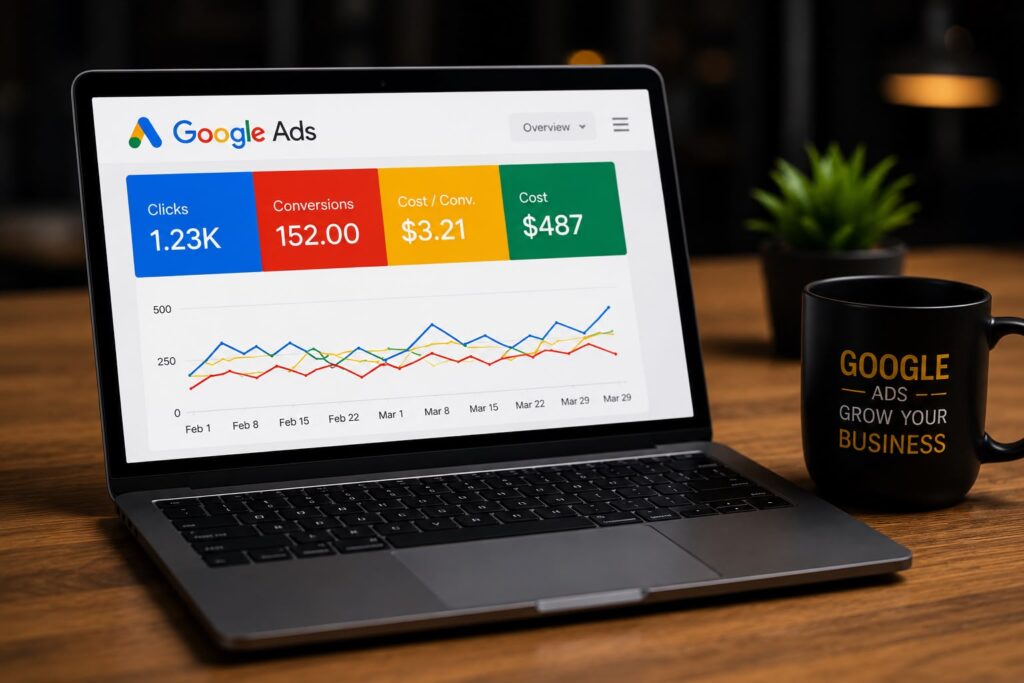
Google Ads: From Clicks to Conversions
Introduction
When customers are ready to buy something, they often begin by searching on Google. This gives businesses an opportunity to appear directly in front of people who are already looking for a particular product or service. Google Ads makes this possible through paid search advertising.
Unlike traditional advertising, where a message is shown to a broad audience, Google Ads allows businesses to target people based on what they search for, where they are located, and other relevant factors. But visibility alone does not make an advertising campaign successful. A campaign becomes valuable when the people who click on an advertisement take an action that benefits the business.
That action could be purchasing a product, submitting an enquiry, making a phone call, downloading something, or booking a service. Therefore, an effective Google Ads campaign should be planned around conversions, not just clicks. As a Digital Marketing Expert in Palakkad, I focus on creating targeted campaigns that connect businesses with the right audience.
Know Your Advertising Purpose
Before creating a campaign, it is important to decide what the advertisement should accomplish. Without a clear objective, it becomes difficult to know whether the money spent on advertising is producing useful results.
For an online shop, the main goal may be increasing product sales. A consultant might want more appointment requests, while a local business may want customers to call directly.
Once the objective is clear, the campaign can be designed around that particular outcome. This also makes it easier to select suitable keywords, write relevant advertisements, and measure performance later.
Understand Customer Search Behaviour
The words people type into Google can reveal a lot about what they need. Keyword research helps advertisers discover these search terms and decide which ones are worth targeting.
Suppose a company provides digital marketing services. It could target searches related to Google Ads management, PPC services, digital marketing agency, or online advertising services.
However, not everyone searching for these terms has the same intention. A person searching for “how Google Ads works” may simply be learning, whereas someone searching for “Google Ads management service” may be ready to contact a provider.
Recognizing this difference allows advertisers to focus their budget on searches that are more closely connected to their business goals.
Make the Advertisement Relevant
Once suitable search terms have been identified, the advertisement needs to capture attention. Users usually scan search results quickly, so the message should communicate its value without unnecessary complexity.
A good advertisement can mention the service, highlight a benefit, and give users a clear reason to continue. The wording should match what the person searched for rather than making a completely unrelated promise.
A suitable call to action can also encourage the next step. Depending on the campaign, this could be “Request a Quote,” “Contact Us,” “Explore Services,” or “Start Shopping.”
The more closely the advertisement matches the user’s needs, the more useful the click is likely to be
Give Visitors a Better Landing Experience
The journey should not end when someone clicks the advertisement. The webpage they reach can strongly influence whether they become a customer.
A landing page should continue the message introduced in the advertisement. If an ad promotes a particular service, visitors should be taken to a page where they can immediately understand that service instead of searching through the entire website.
Important information should be easy to find. Benefits, pricing details where appropriate, contact options, testimonials, and other trust-building elements can support the visitor’s decision.
The page should also be easy to use on mobile devices and should not make visitors complete unnecessary steps.
Control Advertising Costs
Paid advertising requires careful financial planning. A campaign can receive plenty of traffic and still perform poorly if the money is being spent on users who are unlikely to become customers.
Advertisers can examine metrics such as Cost Per Click (CPC), Click-Through Rate (CTR), conversion rate, Cost Per Conversion, and Return on Ad Spend (ROAS).
These measurements provide a clearer picture of campaign efficiency. For example, a keyword generating many clicks but no enquiries may not be as valuable as a keyword that generates fewer clicks but produces several customers.
Budget decisions should therefore be based on meaningful results rather than traffic numbers alone.
Improve the Campaign Through Testing
No campaign is perfect from the beginning. Testing different elements can reveal what works better for a particular audience.
Advertisers can experiment with different headlines, descriptions, keyword groups, audiences, offers, and landing pages. Performance data can then be used to decide which versions deserve more attention.
It is also useful to identify searches that are irrelevant to the business. Adding negative keywords can prevent advertisements from appearing for unsuitable searches and can help protect the advertising budget.
Regular adjustments can gradually improve campaign efficiency
Track Actions That Matter
One of the biggest advantages of digital advertising is the ability to measure user actions. Conversion tracking helps businesses understand what happens after someone interacts with an advertisement.
For example, an advertiser can determine whether users completed a purchase, submitted an enquiry, called the business, or booked an appointment.
This information helps marketers understand which advertisements and keywords are contributing to actual business outcomes. It also allows future campaigns to be based on evidence instead of assumptions.
Conclusion
Google Ads can be an effective way for businesses to reach potential customers at the right stage of their search journey. However, getting clicks should not be considered the final objective.
A successful campaign begins with a clear goal, uses carefully selected search terms, communicates a relevant message, and provides visitors with a smooth landing-page experience. Monitoring costs, testing different approaches, and tracking conversions can further improve results.
When these elements are managed together, Google Ads can move beyond generating website visits and become a practical tool for producing leads, sales, enquiries, and measurable business growth.